
Concept, art direction, research, and writing for a weekly feature on Design*Sponge that showcased iconic design objects throughout history. The feature ran for more than 40 installments and highlighted objects like furniture, textiles, toys, and everyday objects. Each installment was accompanied by illustrations by Libby VanderPloeg.





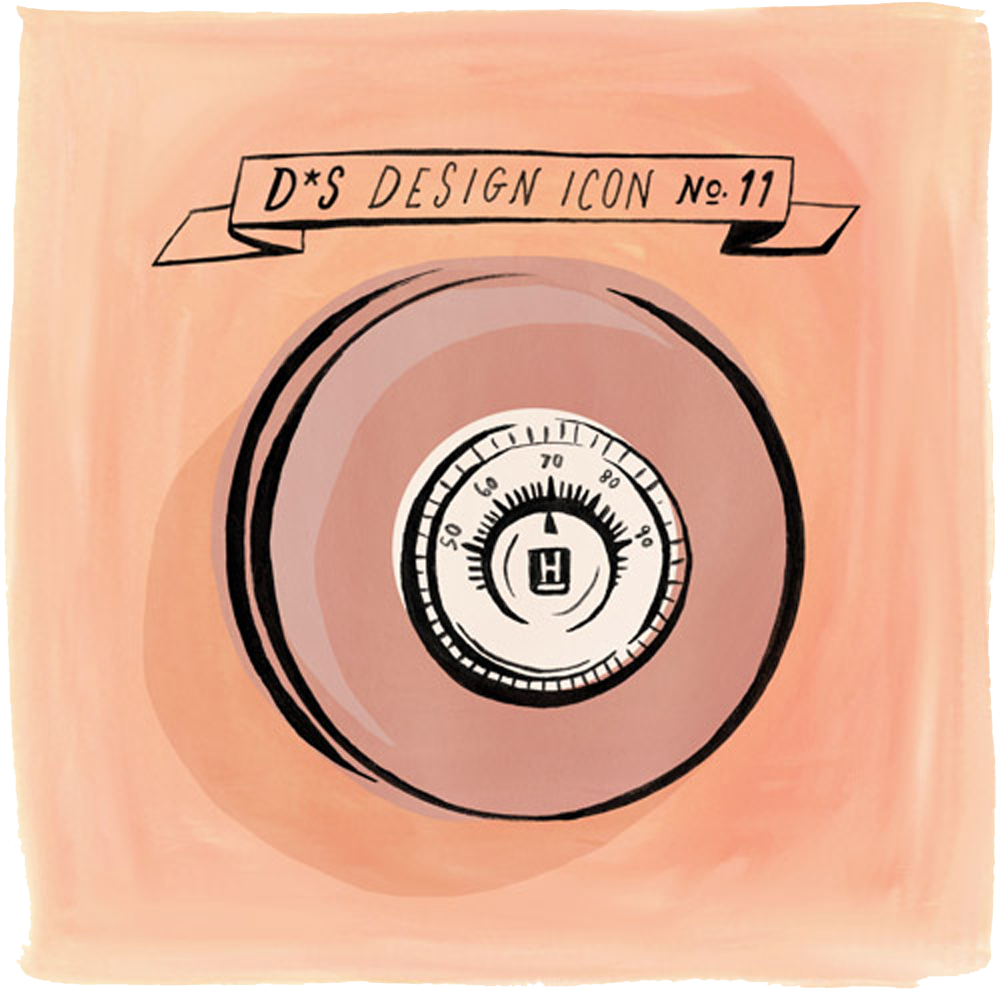
Design Icon No. 11: Honeywell Round Thermostat
Designer: Henry Dreyfuss (1904-1972)
Date: 1953
Country of Origin: United States
Manufacturer: Honeywell
Background: Although Henry Dreyfuss is often compared to his contemporary Raymond Loewy, the famed industrial designer who helped to popularize the 1930s “streamlined” look, Dreyfuss’ work stands apart because of his emphasis not on style but on function. Obsessed with ergonomics and the need for design to suit the human body, Dreyfuss compiled exhaustive data on body measurements and forms in an effort to create the most optimal designs. This information was later compiled into two books— Designing for People (1955) and The Measure of Man (1960). Several of Dreyfuss’ designs have gone on to achieve legendary status (his Bell telephone, for instance), but one of his most ubiquitous designs is without a doubt the Honeywell “Round” thermostat. Designed so that it could hang “squarely” on a wall no matter how or where it was installed, the thermostat never appeared slanted due to its circular shape. The round dial provided a simple and intuitive interface, free from cluttered buttons and unnecessary information. As design lore has it, Dreyfuss had a penchant for drawing perfect circles, something he did continuously. When approached by Honeywell to produce a new, modernized thermostat, Dreyfuss is said to have drawn a circle and said “Here. Go ahead and make something of it.”



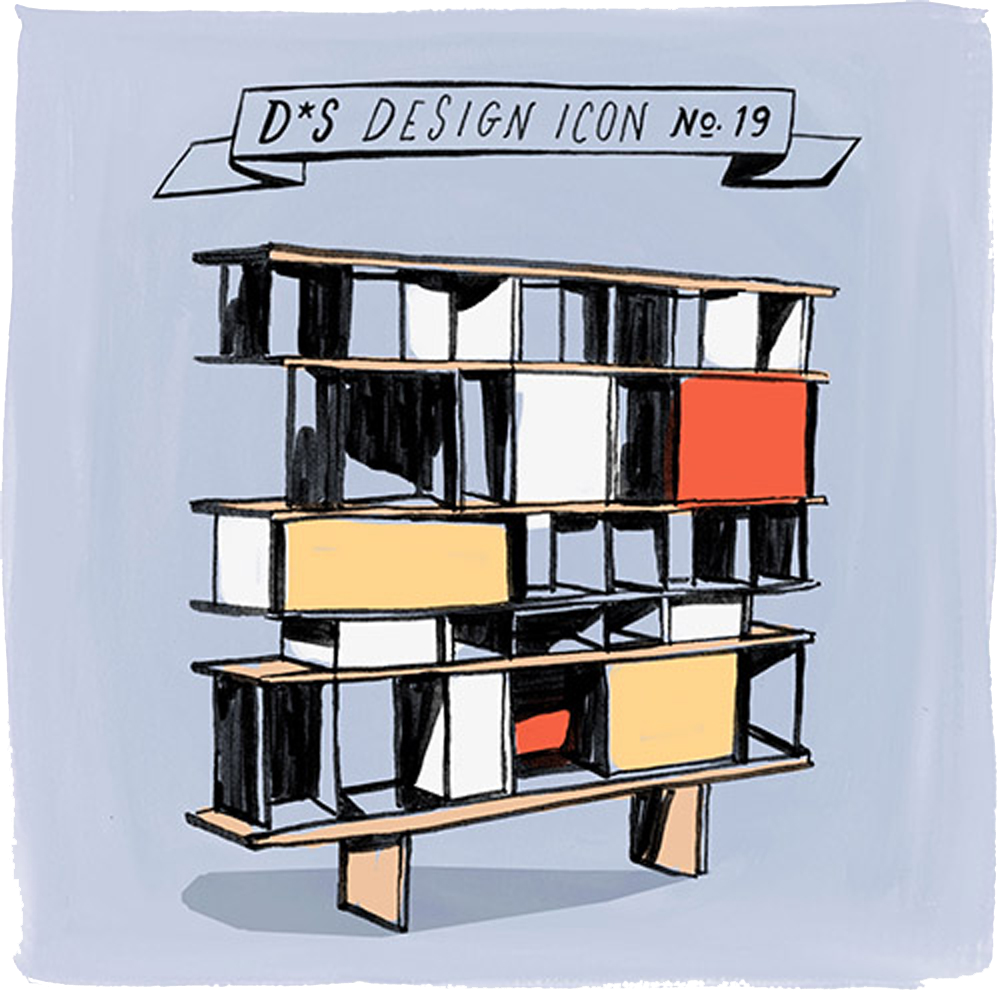


Design Icon No. 19: Bookshelf
Designer: Charlotte Perriand (French, 1903-1999), with Atelier Prouvé
Date: 1953
Country of Origin: France
Manufacturer: Atelier Prouvé (today Perriand shelves are manufactured by Cassina)
Materials and Construction: Oak shelves, aluminum vertical dividers, sliding trays to cover certain areas.
Background: As was the case with Ray Eames, female contributors to design teams were oftentimes overshadowed by their male counterparts during the twentieth century, only to be truly acknowledged in recent years. This was certainly the case for Charlotte Perriand, the designer behind some of the last century’s most iconic pieces of furniture. The above piece, oftentimes referred to as “The Mexican Bookshelf” because it was designed for the Maison du Mexique at Cité Internationale Universitaire de Paris, was commonly attributed to the french designer Jean Prouvé. In reality, the piece was designed by Charlotte Perriand and produced by Prouvé’s Atelier Prouvé. Because Jean Prouvé’s name attracted higher bids at auction, Perriand’s name was all but erased from these designs—it wasn’t until recently that the actuality of Perriand’s authorship was finally accepted and widely acknowledged. This shelf, one of several similar shelves and multi-purpose furniture pieces by Perriand, is composed of oak shelves, subdivided by aluminum vertical elements. Sliding trays ran along the front faces of the shelves, allowing users to hide and reveal certain areas. Because of the shelf’s variously-sized compartments, one was able to store a number of different objects on it. Today, many of Perriand’s shelf designs are in production again, this time by the Italian furniture company, Cassina.




Design Icon No. 31: Wonder Bread
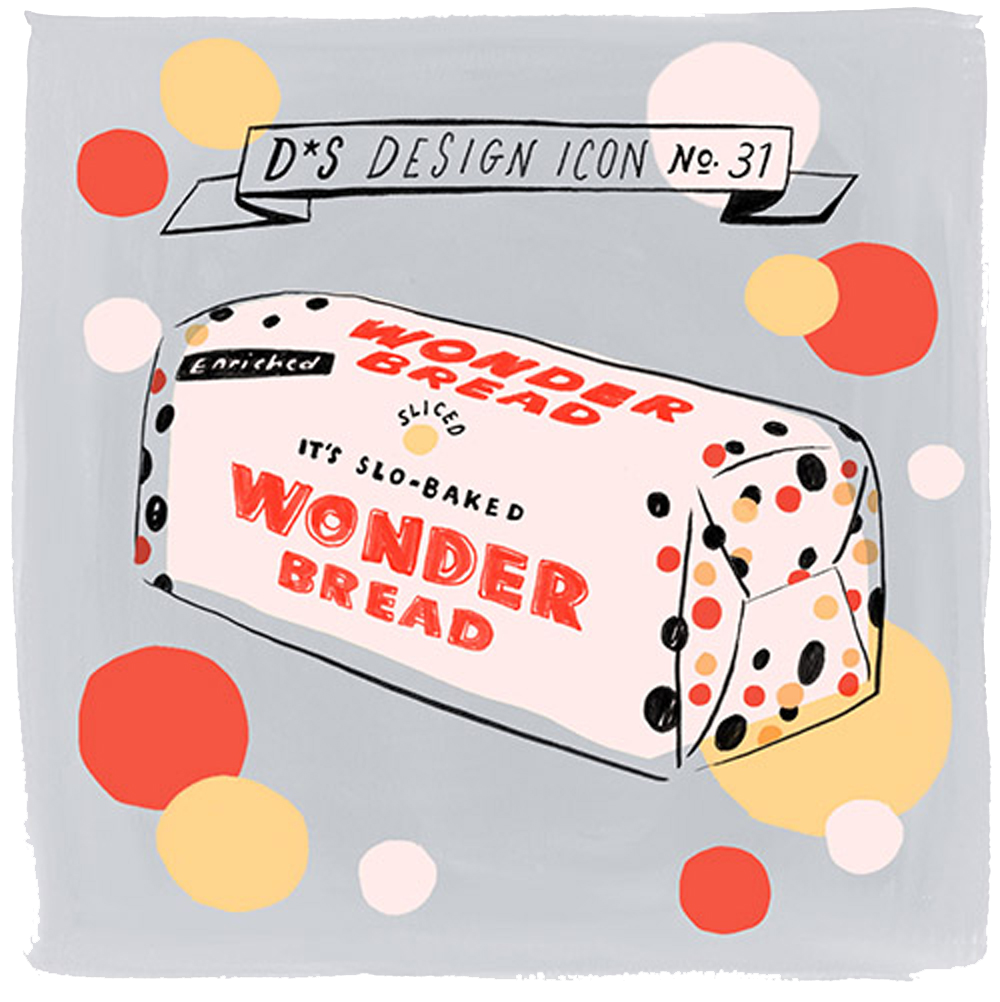
Date: 1921
Country of Origin: United States
Manufacturer: Taggart Baking Company
Background: You know the phrase “the best thing since sliced bread?” Well, as it so happens, the exact date of this world-changing invention is in relatively recent history. Introduced by Wonder Bread in 1929, the concept of pre-sliced bread encapsulated many of the ideals of the time. The late 20s and early 30s saw the introduction of Modernism to America, largely through the over-the-top ornamentalism of the Art Deco and Moderne movements—it wasn’t so much about functionality, but the novel and the superficially futuristic. Scientific and industrial advances had captured the nation’s imagination, something that created a thirst for products that embodied these ideas—even if that product was bread, pre-sliced. Since then, Wonder Bread has become part of the the American canon, the embodiment of the American impulse for wild innovation and an icon of our Atomic Age. In 1939, Wonder Bread took part in New York City’s World’s Fair, an event that showcased similarly futuristic productions, from advances in agricultural technology to the latest and greatest in automobiles. Although it may not seem this way today—indeed, we have long-since abandoned the fluffy white goodness of Wonder Bread for healthier options—Wonder Bread (and its mythology) fit in perfectly.


