Concept, art direction, and set design for West Elm’s 2019 Pride Campaign.
Hosted by Sean Santiago. Videography by Zack Taylor. Styling by Ashley Cheeks.

Concept, art direction, and set design for West Elm’s 2019 Pride Campaign.
Hosted by Sean Santiago. Videography by Zack Taylor. Styling by Ashley Cheeks.
Concept, art direction, video editing, and title design for West Elm
Videography by Zack Taylor. Styling by Elvis Maynard.
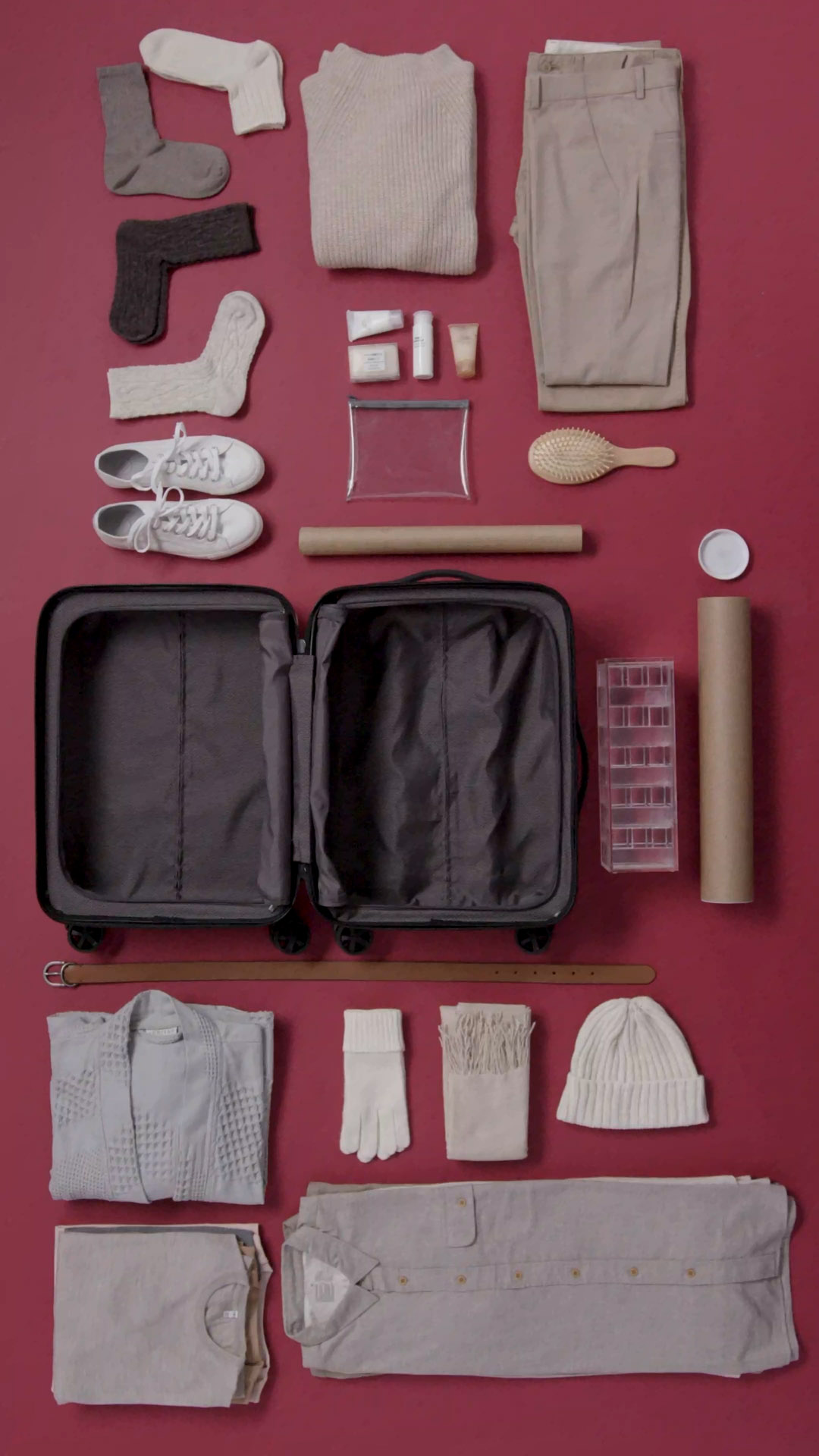
Originally published as “How To Pack A Suitcase”
—
Let’s just get this out of the way: nobody likes to pack. Unless you are a next-level organizing fiend with an inexplicable love for tedium, you probably put off filling your suitcase until the very last minute. This might be expedient in the moment, but has a tendency of complicating things once you reach your destination. We’ve all found ourselves hunched over our bag, tossing wrinkled t-shirts onto the floor in an attempt to find a toothbrush. With the holidays right around the corner, packing becomes even more of a challenge—how to pack your clothes, toiletries, and presents into a carry-on? We got you. Here are a few quick tips to simplify your packing + help you feel organized once you get to your destination.

Concept, art direction, set design, video editing, and title design for West Elm.
Videography by Zack Taylor. Styling by Elvis Manard.
Originally published on the West Elm blog as “How To Get Your Apartment Party-Ready“
There are certain things that are no-brainers when it comes to throwing a party. Food, drinks, music—check, check, check. But there are some other details that can make all the difference between a snooze-fest and an all-nighter (in a good way).
Have you ever noticed how guests always corral in the kitchen during parties, only to leave your living room a ghost town? Do you find that people hover for too long near the canapés and cocktails without circulating? The problem could be traffic flow. While your furniture arrangement might work for day-to-day use, a dining table or an inconvenient sectional chaise can cramp things up when things get crowded, forcing people into bottle-necks. Avoid the holiday traffic jam this year and follow these tips for maximizing your cocktail party floor plan.

1
—
A floating sofa might look lovely on a normal day, but it’s only in the way during a party. Scoot all of your furniture along the walls for your fête to create a clear flow for walking and enough standing room for everybody to be comfortable. Bonus points: if you re-arrange often, think about investing in a flip sectional like our Eddy model shown here. You can switch the chaise from left to right depending on your layout.
2
—
It may be tempting to artfully arrange food and drinks in a centralized location, but it’s a recipe for overcrowding! Instead, place food and beverages throughout your party space to space people out and subtly encourage mingling. Coffee + side tables are great places to put a bowl or two of snacks.
3
—
Need extra seating? Shift some of your throw pillows from your sofa to the floor for a cozy + casual place to sit down.
4
—
Move your dining chairs to the wall and form seating clusters to foster conversation. Side tables can be moved from the sofa’s edge to these areas for placing drinks and snacks.
5
—
Transform a console into a bar by putting down trays and glassware.
6
—
Swing your dining table against the wall and turn it into an oversized buffet for serving large dishes or punch!

Concept, art direction, video editing, title design, and writing for West Elm
Videography by Zack Taylor. Styling by Marie Sullivan. Food Styling by Jason Schreiber.
Originally published for the West Elm blog as “How To Set Your Table for The Holidays”
—
If you’re miserable at chopping vegetables and a roasting turkey is best left in somebody else’s care, chances are you’re the type of person who gets tasked with setting the table at holiday dinners. Although this not-quite-thrilling duty is simple (does it really matter where the salad fork goes?), it does present the culinarily challenged a rare opportunity to show off. Follow the simple tips in this video below and you’ll earn extra points with your host and compliments from other dinner guests. “What a lovely table setting! Who did that?” YOU DID.

Concepted, written, and photographed for West Elm’s blog, Front + Main.
—
Forget sock boots and metallics—the hottest Fall fashion trend that we can’t get enough of is duvets. With a name derived from the French term for down—an allusion to the feathery material that typically fills them—duvets are customarily seen atop lavishly appointed beds and covered in all manner of beautiful fabrics. This season, they’ve come into vogue as a stylish garment—one that can be donned for practically any occasion. Need something to wear for gala season? Duvet. Going out for a quick lunch with the ladies? Duvet. Heading to an important business meeting? Yes way, duvet! While there are myriad ways to style this new wardrobe essential, here are 10 of our favorites.

1
—
The Ball Gown
The quintessential duvet look. Pair with the shoes and jewelry of your choice, or go without for a bold and minimal look.

2
—
The Chic Scarf
Make a statement when you hit the streets this fall by tossing your duvet around your neck. Added bonus: it will act as a stylish airbag if you end up tripping on the sidewalk.

3
—
The Lump
Got a movie night planned with your SO? Go for this elegant seated look.

4
—
The Ghost
Bad hair day? No need to fret when you’ve got a duvet in your sartorial arsenal. Throw it right over your head to complete this mysterious femme fatale look.

5
—
The Mermaid
Remember leg warmers? Try an au courant twist to the eighties trend by wrapping a duvet entirely around your lower body.

6
—
The Friday Night
There is no better way than to celebrate the end of the week than by wearing the season’s must-have item!

7
—
The Saturday Morning
Evidence that duvets are your closet’s most versatile item, they can seamlessly shift from day to night and back to day again!

8
—
The Coffee Line
Add a duvet to your day and dress up even the most quotidian tasks! This comfortable look will take you from grabbing your morning coffee to powering through a day at the office.
9
—
The Puddle
Favored by trend-setting avant-garde crowds, this look sees the duvet worn atop a sedentary body. Excellent for leisure activities.
 10
10
—
The Midnight Snack
Stunning when bathed in the crystalline light of a refrigerator, this ravishing look will add a touch of intrigue to your late nights.

A video series on basic plant care, created for West Elm’s Instagram channel.
Concept, art direction, video editing, and title design for West Elm.
Videography by Zack Taylor.

A feature on writer and actress Tavi Gevinson’s reading nook.
A content collaboration between West Elm, StreetEasy, and The Brooklyn Public Library.
Photographed by Sean Santiago.
Originally published for West Elm’s blog as “A Visit To Tavi Gevinson’s Brooklyn Reading Nook”
—
When writer and actress Tavi Gevinson vacated her West Village apartment for Fort Greene, Brooklyn, she did so for many of the same reasons people turn to New York’s most populous borough: SPACE. “My old apartment was adorable, but small,” the Rookie Magazine founder says, “and after two years, I had really outgrown it.”
After learning of partnership potential with 300 Ashland, a new development along Brooklyn’s Flatbush Ave thoroughfare, she jumped at the opportunity. Gevinson’s new digs, which need to function as both home and workspace for the self-employed maven, fit all of her needs perfectly. Not only did her new one-bedroom have ample space and natural light, but its central location afforded proximity to several train lines and some of the city’s best cultural institutions. Just down the block is the esteemed Brooklyn Academy of Music (which Tavi has already been sure to snap selfies from) and the Brooklyn Museum and Brooklyn Botanical gardens are a short subway trip away. Another exciting development? The Brooklyn Public Library has plans to open a branch right in the base of 300 Ashland.
To help celebrate her new home, west elm and Street Easy teamed up with Tavi to help outfit her new apartment and share a special glimpse into the avid bookworm’s reading nook. Take a closer look below as Tavi shares five of her favorite books, pulled from her new neighbor, The Brooklyn Public Library! Want to see more of the space? Head over to Street Easy to see the Tavi’s full apartment!

Whatever Happened to Interracial Love?
by Kathleen Collins
This short story collection is both sweeping and intimate; cinemascoped and lived-in; a blend of Kathleen Collins’ filmmaking perspective with details that feel culled from personal experience. One story describes a love scene as though the narrator is setting up shots for a movie. Another covers a couple’s whole life together in a series of vignettes and half-unspoken rapport, like maybe true love is a kind of two-person omniscience; maybe true love is background music. Sex is, in part, a way for these characters to get to know themselves, and to know how they are seen by others. The reader listens in on inner and shared dialogues about blackness, black womanhood, and family. Collins died in 1988 and these stories were published posthumously, but the questions she explored remain relevant–and her capturing of them, revolutionary.
Killing and Dying
by Adrian Tomine
I don’t think you have to be a good person to make good art, but it’s really nice when the forces of creativity and compassion feed each other, instead of being at odds. When I interviewed Adrian Tomine about this book of graphic stories, he talked about how being a father has affected his work: “When I was a young, single guy, people either sucked, or they were awesome. And that was it. I loved some people, and everybody else could go to hell, you know? And I think now I have really complicated feelings about the average person that I meet. I realize that’s actually a really useful thing as a writer, to try and bring into your work. To take that feeling of, This guy’s kind of an asshole, but I sort of feel sorry for him, and I sort of relate to him, and to try to impose that on these fictional characters, has been a fun challenge for me.” I’ve always loved his books, going back to his earliest Drawn & Quarterly comics from when he was a teen. But in Killing and Dying, the care given to every character, all in uniquely difficult positions, is a beautiful example of how being open in life can open up possibilities within art. Also, comics seem like the hardest thing to make (to me), and I have so much respect for anyone who does them.
The Witches: Salem, 1692
by Stacy Schiff
I read this book about the witch trials in Salem when I was doing The Crucible on Broadway. I needed help understanding the gravity of words and actions that, in 21st century secularism, seemed either inconsequential (“go to hell”) or silly (dancing in the woods). Much has been written of the witch hunt over the years — it was Marion Starkey’s already extensive The Devil in Massachusetts that inspired Arthur Miller to write his play begin with — but nothing captured my attention like this one. Stacy Schiff’s descriptions are utterly enthralling, without falling into the sensationalist, cover-story-feeling tone of other books that try to make history “fun.” Schiff lets the research speak for itself: According to court records, Mary Warren’s tongue hung out of her mouth for so long that it turned black. When Tituba spread her story of meeting with the devil throughout Salem, Schiff writes that it was like she’d handed out hallucinogens. That helped me process what it would be like for your world to actually be that small; no images, no information, no culture, nothing but your community and your beliefs and like, a bog. Schiff’s portraits of people/characters I’d hated since high school–Reverend Parris, for example–humanized them in ways political allegories can’t. (The Crucible is a rare allegory which treats its characters like people instead of symbols, but it’s not perfectly spelled out for every production or, say, 16 year-old English student.) I’d imagine rereading The Witches now would illuminate even more about America’s history of paranoia and hysteria. It would also help to see how, when assigning roles of heroes and villians gets you nowhere, understanding where everyone is coming from may actually make for progress, rather than fatality.
History of Beauty
by Umberto Eco
What to do when you’re totally fatigued from being inundated with images and notions of conventional beauty? Place it in historical context, of course! I like having this around as a reference book and to lend some perspective; make my daily experience with appearance more interesting. While it’s largely concerned with representations of beauty in art, it reads more like philosophy than art history. One of many Umberto Eco works that have had me rethink what I’d previously believed about personal style, taste, and aesthetics.
I’m Gonna Pray For You So Hard
by Halley Feiffer
Everyone I know who saw the last production of this play talks how about how it wrecked them emotionally. I didn’t get to see it, but reading it is so gutting that I don’t know if I could handle a performance. It centers on the relationship between a young actress and her esteemed playwright father. Both have been hollowed out by their respective experiences with abusive parents and with show business. Act I begins with them bracing themselves for the review of the daughter’s new play, but their frenetic opening night energy turns grim. Success becomes as threatening as failure. And then–well, I started tearing up just describing Act II to a friend the other day. The last time I reread I’m Gonna Pray For You So Hard, I was reminded of this line from Shaw’s Man and Superman: “There are two tragedies in life. One is not to get your heart’s desire. The other is to get it.” And yet! This story isn’t fueled by cynicism or bitterness, but Halley Feiffer’s deep sense of compassion.

Concept and Art Direction for a series of zines about the topic of “home.” Featured as printable downloads for West Elm’s Holiday 2016 Campaign.
Illustrations provided by Tallulah Fontaine, Marcus Oakley, Maria Ines Gul, and Julia Rothman.


A holiday gift guide, focused on tech gear.
Market editing, writing, and design for Design*Sponge.
Originally published as “Gift Guide: Gadgets, Gizmos & Tech”
Tech gift guides can sometimes feel like the neglected middle children of Gift Guide Land—too often I see them populated with afterthought items, a perpetuation of the notion that tech can’t be pretty. Well, dear readers and fellow tech obsessives, I am here to tell you that this does not need to be the case! Why choose between form or function when you can have both? From Allied Maker’s wonderfully whimsical cloth-covered extension cord(above) to Karlsson’s retro-fabulous flip clock, these gifts will satisfy both the tech junkies and the design savants on your holiday gift lists! Check out all of these wonderful gizmos, gadgets, and electrical doohickeys after the jump! Power on!

1. Arne Jacobsen Station Alarm Clock | 2. Fujifilm Digital Camera | 3. Nike+ FuelBand fitness tracker | 4. Flow Radio + Speaker | 5. Pipe Earphones | 6. LG Portable Projector | 7. Present Time Karlsson Flip Clock

Tips for taking the best photos on your iPhone.
Concept, writing, and graphic design for Design*Sponge.
Originally published as “5 Tips for Making The Most of Your iPhone Camera”
There’s an oft-quoted phrase that says “the best camera is the one you have with you.” Today, the camera that almost everybody has with them is an iPhone and, despite its tiny size, it actually packs quite the photographic punch. Over the course of time that I’ve had one, my iPhone has slowly worked its way up to becoming my default camera—my bulky DSLR coming out only when I need a truly “professional” shot. There’s no denying the iPhone’s (or any smartphone’s) benefits—it’s compact, actually fits into a pocket, and takes photos that genuinely rival consumer-grade point-and-shoot cameras. (For anybody skeptical of the iPhone’s photo-taking power, I highly recommend Austin Mann’s exhaustive iPhone 5S review.) As with any camera, though, the iPhone’s capabilities are vastly improved when you learn how to use it, taking advantage of everything it has to offer. Below, you will find my own favorite tips for making the most of your iPhone’s camera—from ways to expertly compose a shot to tricks for getting a more “manual” look. Let’s get snapping!
1. Shoot with a grid! Like many professional cameras, the iPhone’s camera app has a grid feature that allows you to view your shots with a 3×3 grid overlaid on top of it. There are numerous benefits to shooting this way, from making sure objects are truly centered to making sure your image is perfectly aligned. Although a grid, what with its right angles and implications of exactitude, seems like it might be creatively stifling, it actually opens up a world of awesome compositional possibility. On the iPhone, the grid isn’t turned on by default. Go to the “Photos & Camera” section of the Settings app to turn it on.
2. Get fancy with your focus! The iPhone automatically adjusts its focus and exposure every time you reframe a shot (you can see it doing this with the little square that pops up on screen when you do this). However, “manually” adjusting your focus for more customized shots is easy-peasy: just tap the screen once to choose the object or location that you want focused/properly exposed. If you want your camera’s focus to be on something that isn’t in the frame or you want to be able to shift your composition after focusing, the AE/AF Lock feature is great. Simply press down on the screen and hold until the focus square pulsates twice. You will then see the words “AE/AF Lock” at the top of your screen. This feature is especially useful if you’re trying to get a nice “blurred” effect on your image—just lock your focus on something super close up and then take your photo!
3. Get the perfect shot! One feature that professional photographers use to ensure the perfect shot, especially with portraits, is burst mode. Essentially, taking photos in burst mode takes a number of photos in quick succession, allowing you to edit through them and find the perfect shot (no blinking eyes or awkward poses!). The iPhone has this feature built in—simply press and hold down the camera’s shutter button. Instead of the singular “snap” noise that accompanies a tap on the shutter, you’ll hear a quick succession of snaps—and your iPhone will capture photos for as long as you hold the button. Quick tip: for super-simple snapping, and to take photos the old fashioned “button” way, simply hold down the top volume button to snap a photo.
4. Optimize your shooting environment! Whether you’re shooting with a professional camera or an iPhone, the same rules of lighting and composition apply. It’s always best to use natural light (even with the iPhone 5S’s new “True Tone” flash, artificial light looks, well, artificial). Aligning your grid with elements in your environment also leads to more appealing compositions. Check out our guide for shooting interiors for tips for composing the best photos.
5. Get the best apps! Although I recommend shooting in the iPhone’s main camera app before importing to other apps like Instagram (this allows you to save a high-res photo and then crop to your specifications), I do have a few exceptions to this rule. The VSCO Camapp, which is quickly becoming the gold standard of iPhoto photography, is a superbalternative to the iPhone’s built-in camera. Its camera mode allows for even more manual control, from focus lock to a two-finger tap that allows you to adjust your exposure and focus separately—a feature that I use an a regular basis. VSCO also has a number of amazing filters and post-processing options that allow for great fine-tuning and photos that look remarkably film-like. Aside from VSCO cam (a must-have for any iPhone photographer), I also recommend AfterLight for its post-processing and framing options.